


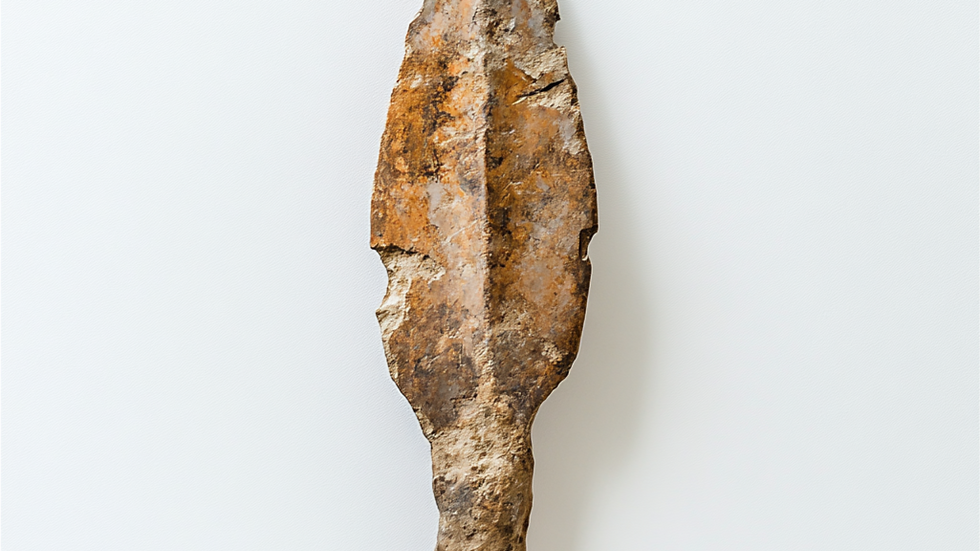
Application of Raman Analysis in Archaeology
Raman Spectroscopy in Archaeological Analysis emphasizes its non-destructive capabilities for examining ancient materials. It's invaluable in Pigment and Paint Analysis, Ceramics and Pottery, and Stone and Lithic Materials, revealing composition and manufacturing techniques. Raman aids in studying Glass, Metal Artifacts, and Organic Materials, including residues and textiles. Applications extend to Human Remains, Authentication, Conservation, and Provenance Studies, providing critical cultural insights. Highlighting In Situ and Portable Raman Analysis ensures content appeals to both field archaeologists and lab researchers

Raman Analysis in Pigment and Paint Analysis
-
Identification of pigments in wall paintings, manuscripts, and artifacts.
-
Differentiating natural vs. synthetic pigments (e.g., cinnabar, ochre, Egyptian blue).
-
Studying paint degradation and chemical changes over time

Raman Analysis in Ceramics and Pottery
-
Identifying mineral phases in ceramic glazes and bodies.
-
Studying firing conditions and manufacturing techniques.
-
Detecting residues (e.g., oils, resins, or food remnants) on ancient pottery

Raman Analysis in Stone and Lithic Materials
-
Characterizing stone tools and determining lithic raw materials (e.g., flint, obsidian).
-
Studying weathering and patination on stone artifacts.
-
Identifying alteration minerals on monuments and sculptures

Raman Analysis in Glass and Enamels
-
Determining glass composition and colorants (e.g., cobalt, copper, iron).
-
Identifying degradation products in ancient glasses.
-
Distinguishing ancient vs. modern glass artifacts

Raman Analysis in Metal Artifacts and Corrosion Products
-
Identifying corrosion layers and oxides/sulfides on bronze, iron, silver, etc.
-
Analyzing surface treatments like gilding or patination.
-
Studying metal-working techniques

Raman Analysis in Organic Materials
-
Characterizing ancient resins, dyes, oils, waxes, and binding media.
-
Studying organic residues in burial contexts or containers.
-
Analysis of textiles and fibers (e.g., indigo, madder dyes).

Raman Analysis in Human Remains and Bioarchaeology
-
Analyzing bone, tooth enamel, and dentine to understand diagenesis.
-
Detecting pathological markers or burial treatments.
-
Studying ancient dietary residues or calcified tissues

Raman Analysis in Authentication and Conservation
-
Detecting modern restoration materials or forgeries.
-
Monitoring chemical changes during artifact degradation.
-
Evaluating conservation treatments and their long-term stability

Raman Analysis in In Situ and Portable Analysis
-
On-site Raman analysis using handheld or portable devices.
-
Ideal for museum or fieldwork contexts, avoiding sample removal.
-
Quick, non-invasive diagnostics without damaging valuable artifacts

Raman Analysis in Provenance Studies
-
Determining the geological or cultural origin of raw materials.
-
Comparative analysis across excavation sites or collections

Raman Spectroscopy in Various Science Disciplines
-
Raman analysis in Agriculture Science
-
Raman analysis in Environmental Science
-
Raman analysis in Food Science and Technology
-
Raman analysis in Geology
-
Raman analysis in Pharmaceutical Science and Engineering
-
Raman analysis in Marine Science
-
Raman analysis in Earth Science
-
Raman analysis in Nano Science and Nano Technology
-
Raman analysis in Material Science
-
Raman analysis in Archaelogy
-
Raman analysis in Architecture

Applications Raman Spectroscopy in Various Engineering Disciplines
-
Raman analysis in Mechanical Engineering
-
Raman analysis in Civil Engineering
-
Raman analysis in Electrical Engineering
-
Raman analysis in Chemical Engineering
-
Raman analysis in Biomedical Engineering
-
Raman analysis in Aeronautical Engineering
-
Raman analysis in Mining Engineering
-
Raman analysis in Petroleum Engineering
-
Raman analysis in Metallurgy
-
Raman analysis in Dairy Technology
-
Raman analysis in Energy Science and Engineering
-
Raman analysis in Polymer Science and Technology
-
Raman analysis in Biomaterials
-
Raman analysis in Textile Engineering